The Allowance System for Kids That Actually Teaches Money
Most allowance systems don’t fail because kids don’t listen.. they fail because parents never had a system to begin with.
If you’ve ever felt unsure whether allowance should be tied to chores, wondered how much is “too much,” or quietly questioned why your child still spends everything the second they get it.. this isn’t a discipline issue. It’s a structure issue.
Before reading another tip or downloading another chart, pause whatever allowance system you’re currently using. You don’t need to tweak it. You need to replace it.
Why Most Allowance Systems Don’t Work

Most parents don’t intentionally design an allowance system. It just.. happens.
Money shows up when:
- a chore is completed
- behavior improves
- parents feel guilty
- grandparents visit
- cash happens to be in a wallet
The message kids receive isn’t subtle. It’s chaotic.
I see this pattern over and over: parents say allowance is about learning, but use it emotionally. When a child is helpful, money appears. When they aren’t, money disappears. Kids don’t learn responsibility from this — they learn unpredictability.
Here’s the deeper issue most parents don’t realize:
Allowance is treated like a reward, not a practice system.
We would never teach reading by randomly handing a book to a child when they behave well. We would never teach sports by changing the rules every week. But with money — one of the most emotionally charged adult skills — we improvise.
Here’s the deeper issue: kids learn best through consistent habits and predictable patterns. Research in child development from educational experts shows that consistency supports responsibility and confidence by letting children see consequences and patterns over time.
Common failure points:
- The rules change mid-month
- Chores and money get tangled
- Parents rescue kids from regret
- There’s no visual structure
- There’s no clear purpose for the money
When allowance fails, it’s not because kids “don’t get it.”
It’s because they were never given a system stable enough to practice in.
The Only Allowance System That Builds Real Money Skills

The moment everything shifted for us was when we stopped asking, “How much should kids earn?” and started asking, “What skills should this money build?”
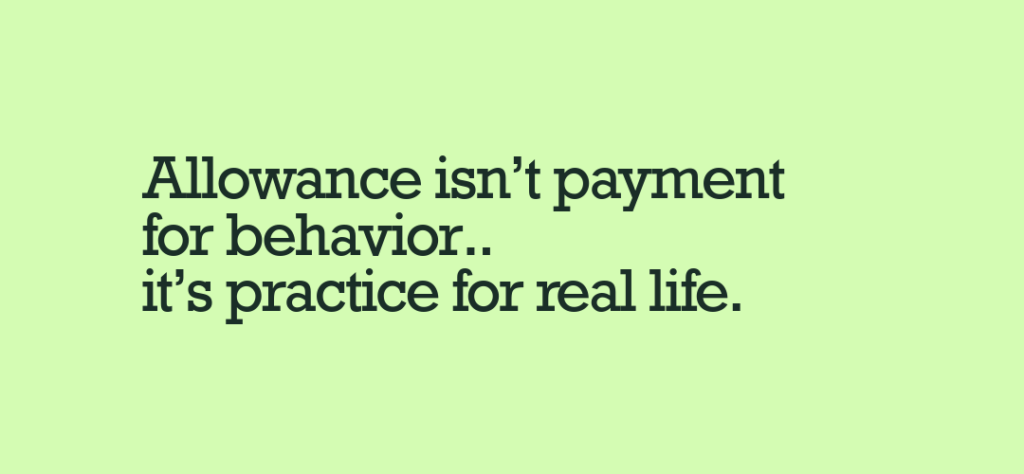
Allowance is not payment.
Allowance is practice income.
That single mindset shift removes 90 percent of the conflict parents experience.
The 3-Bucket Allowance System
Every dollar has a job before it’s ever spent.
- Save – for future goals
- Spend – for personal wants
- Give – for generosity and values
The buckets matter less than the habit they create: intentional allocation.
This system teaches kids:
- Money is finite
- Choices come with tradeoffs
- You can’t spend what you’ve already assigned
- Values show up in how you use money
The first time we implemented this, one child spent every cent of their “spend” bucket immediately. I wanted to intervene. I didn’t. Two weeks later, they noticed they couldn’t participate in something they wanted. That moment did more than any lecture ever could.
That’s not cruelty.
That’s safe consequence.
Allowance by Age.. What Actually Makes Sense

Parents obsess over the amount. The amount is the least important part.
What matters is responsibility scaling.
Ages 4–6: Awareness Stage
At this stage, allowance is about exposure, not independence.
What works:
- Small, predictable amounts
- Physical money kids can touch
- Very short cycles (weekly works best)
- Simple language
What to actually say:
“This money is for learning how money works. Some you save, some you spend, some you give.”
Mistake to avoid:
Expecting gratitude or restraint. At this age, curiosity matters more.
Ages 7–9: Decision Stage
This is where habits start forming.
What works:
- Slightly larger allowance
- Clear visual charts
- Simple savings goals
- Letting kids make imperfect choices
This is also where parents tend to sabotage progress by rescuing kids from regret.
If a child spends everything immediately, resist the urge to replace it. Say:
“That was your choice. Next time you might choose differently.”
This builds confidence, not shame.
Ages 10–12: Independence Stage
Now money becomes personal.
What works:
- Monthly allowance instead of weekly
- Responsibility for small personal expenses
- Optional savings goals
- Less parental commentary
If kids haven’t practiced by now, money starts to feel overwhelming later. This stage is where you prepare them for real-world decision-making.
Chores vs Allowance.. The Line Parents Get Wrong
This is the most emotionally loaded debate around allowance.
Here’s the clear line:
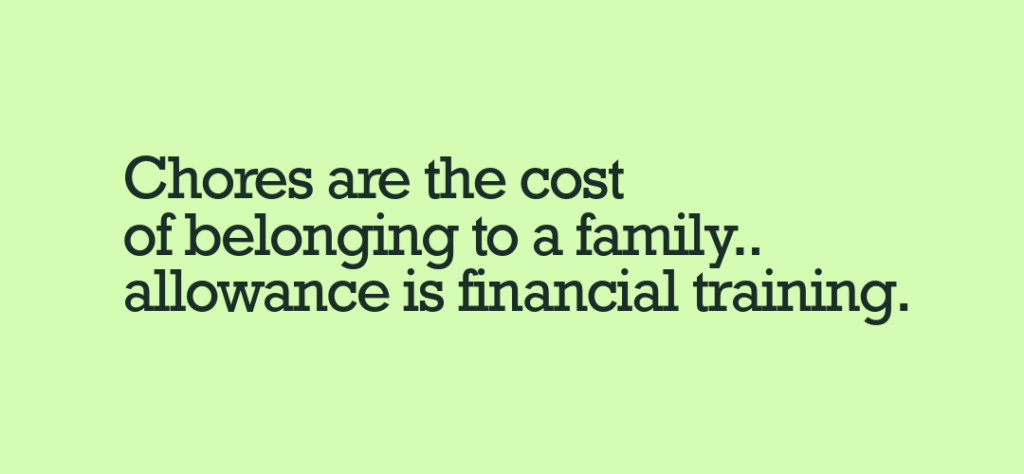
Chores are not paid work.
They are the cost of belonging to a family.
Allowance is not compensation.
It’s financial training.
When chores are directly tied to money:
- Kids stop helping when money stops
- Responsibility becomes transactional
- Family contribution turns into negotiation
The alternative is cleaner and calmer:
- Everyone contributes to the household
- Allowance exists regardless of chores
- Extra work can earn extra money optionally
This removes daily power struggles and keeps money from becoming a behavioral weapon.
The Allowance Chart That Reinforces the System
Most allowance charts fail because they track tasks, not decisions.
A chart should reinforce values, not control behavior.
A useful allowance chart tracks:
- Amount received
- Amount saved
- Amount spent
- Amount given
This turns money into something kids can see and reflect on, not just feel.
This is also where systems start to scale. Charts reduce reminders, arguments, and parental mental load.
Common Allowance Mistakes Parents Make
Picture This prompt:
A thoughtful image of a parent and child sitting together reviewing money calmly.. reflective tone, no shame.
These mistakes are common — and fixable.
- Paying randomly
- Changing rules mid-cycle
- Rescuing kids from regret
- Overexplaining instead of letting experience teach
- Expecting gratitude instead of growth
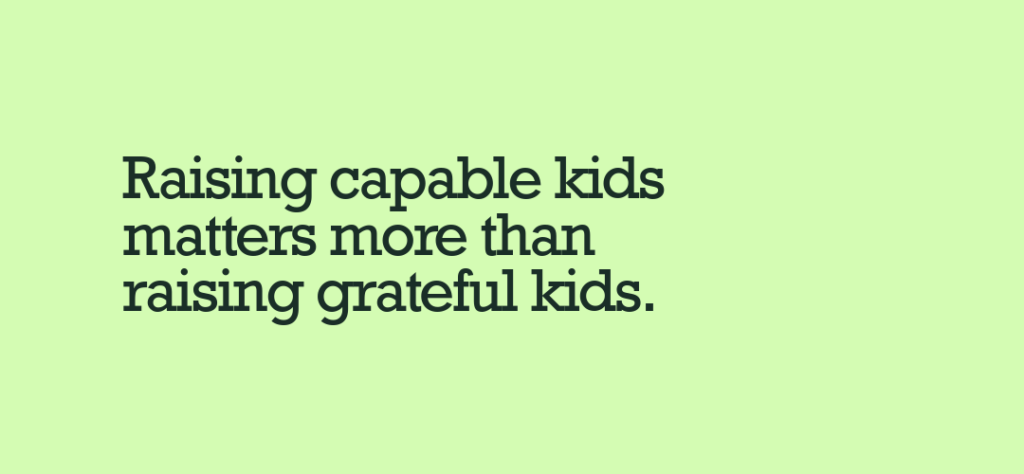
Allowance is not about raising thankful kids.
It’s about raising capable ones.
Capability builds gratitude later.
Parent Checkpoint.. Read This Before Continuing
Most parents worry this system is too permissive.
It isn’t.
Structure without emotion creates freedom.
Structure without rescue creates confidence.
If you’re thinking, “This feels uncomfortable,” that’s often a sign it’s working.
How to Start This Allowance System This Week

You don’t need a reset speech. You need clarity.
Here’s how to begin:
- Explain allowance is now for learning, not rewards
- Introduce the three buckets
- Choose a predictable schedule
- Let kids make choices
- Stay consistent for 30 days
That’s it.
No lectures. No micromanaging. No guilt.
Why This System Works Long-Term
This system works because it mirrors real life.
Money is:
- Limited
- Choice-driven
- Emotional
- Value-reflective
Kids don’t need more rules.
They need repetition in a safe environment.
Final Thought
Allowance isn’t about control.
It’s about confidence.
When kids grow up practicing money with structure and freedom, they don’t fear it, avoid it, or rebel against it.
They use it.